The UCL Graft Journey: Understanding Tommy John Surgery’s Critical Timelines
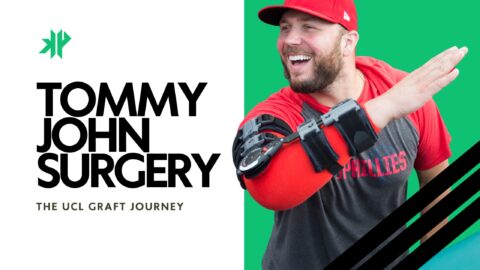
Have you ever seen someone walking around with one of those robot looking braces on their arm only to find out they have just had Tommy John Surgery? You might have wondered why pitchers need to wear such a device and what exactly that device is allowing the athlete to do. In the context of recovery from Tommy John there are so many questions parents and recipients have along these lines.
You’ve likely heard the term “Tommy John Surgery” (UCL Reconstruction) tossed around, and probably, the even more common refrain: “It’s a year-long recovery.” But what exactly is happening during that year? Why does it take so long? And, most critically, when does that new ligament – the graft – truly “take” or “heal”? As someone who’s delved into the intricacies of Tommy John Surgery, I can tell you that understanding the biology behind the timeline is key to patience and successful rehabilitation. It’s not just about getting clearance from your surgeon; it’s about respecting the incredible, complex process your body goes through to rebuild itself.
Step 1: The Post Op Period (Fresh From Surgery)
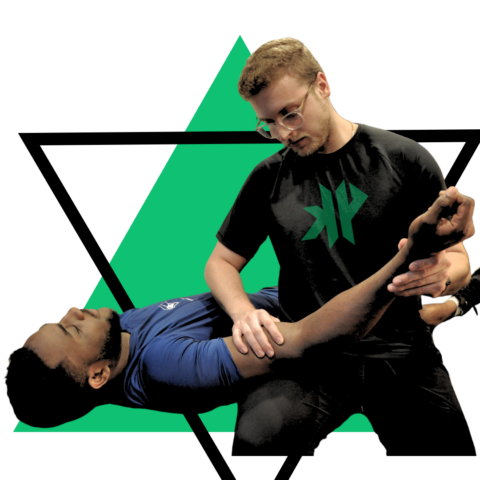
Right after surgery, that new UCL graft is at its most vulnerable. Like, extremely vulnerable. We’re talking about a piece of tendon (often from your forearm or hamstring) that’s been surgically threaded through bone tunnels and anchored with sutures. While those sutures and bone anchors provide immediate mechanical stability, the graft itself is essentially a dead piece of tissue awaiting support to come back to life. Think about it like this, the blood supply has been severed, the cells within the tendon are starting to die off, and your body hasn’t yet recognized it as “part of the team.” It’s an inert structure, held in place by surgical magic, but lacking its own biological life support system. This is why you’re in a brace, restricted to specific flexion and extension limits, and why your physical therapist gives you the “death stare” if you even think about doing something stupid. “The initial period following UCL reconstruction is characterized by the graft’s avascularity and cellular necrosis, making it highly susceptible to mechanical failure without adequate protection,” notes a foundational text on sports medicine (Andrews & Wilk, 2012). This isn’t just theory; it’s why pushing it too early is a one-way ticket back to the operating table.
So, how does a dead piece of tendon become a strong, living ligament? This incredible process is called ligamentization. It’s a biological marvel that transforms the graft over many months. The first phase, spanning roughly the first six weeks, is dominated by inflammation and revascularization. Your body, ever the diligent repair crew, immediately sends inflammatory cells to the graft site. This is quickly followed by the growth of new blood vessels that slowly infiltrate the graft—a process known as revascularization. Think of it like a new road network being built into a previously isolated area. Crucially, during this phase, the graft is actually getting weaker before it gets stronger, as the initial cells die off and the new ones haven’t fully moved in and set up shop (Ahmad et al., 2004). This fragility is why strict protection of a brace and caution from the athlete is paramount.
Step 2: The Intermediate Period
As we move into the intermediate period, from about six weeks to six months, the elbow transitions into the stage of cellular proliferation and collagen deposition. By about six weeks post-op, the surgical fixation points (sutures, bone tunnels) are generally considered stable enough to allow for increased range of motion and discontinuation of the brace for daily activities. This is the first major psychological hurdle where you start to feel a little more “normal.” However, the major biological shift is underway: specialized cells called fibroblasts migrate into the graft, laying down new, haphazardly organized collagen fibers. Imagine a tangled mess of spaghetti. But they’re there, forming the early scaffolding of your new ligament. The graft is slowly gaining intrinsic biological strength, which is why it becomes less vulnerable, but it remains far from robust enough for high-velocity stress.
The long haul begins in the subsequent phase: remodeling and maturation, spanning from six months out to eighteen months or even longer. This is where the magic truly happens. The disorganized collagen fibers begin to align themselves along the lines of stress, becoming stronger and more organized. The graft tissue gradually transforms, both microscopically and macroscopically, to finally resemble a native ligament. It becomes denser, stiffer, and, crucially, capable of withstanding the incredible forces placed on the elbow during overhead throwing. “The complete biological maturation of the graft to a tissue structurally comparable to native UCL has been documented to extend beyond 12 months, often up to 18 months or more,” according to studies on graft histology (Sauers et al., 2017).

Step 3: The Return To Throw Period
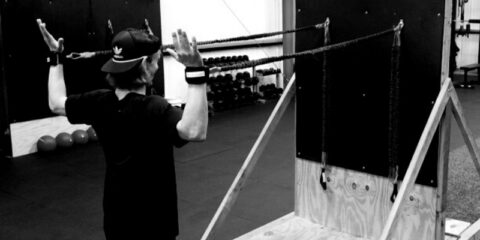
To directly answer the burning question of “how vulnerable is the graft at this point? The graft is no longer critically vulnerable and is structurally sound enough to begin a controlled, low-stress activity around four to six months post-op. This is not arbitrary; it is the time point where the graft has undergone sufficient ligamentization to tolerate the controlled, progressive stresses of a return-to-throwing program. The new collagen is forming, and the tissue has gained enough tensile strength to manage the low-intensity, gradual build-up of throwing mechanics. The final functional test comes at nine to twelve months, where athletes begin returning to competitive pitching. While the graft isn’t fully mature, it’s considered functionally strong enough to withstand increasing valgus stress. However, for the graft to achieve its true peak strength and maximum durability, the process extends beyond the year mark, often requiring up to eighteen months of careful, progressive loading to account for the final stages of collagen remodeling and alignment. This is why continued strength development AND A PROPERLY PROGRESSED THROWING PROGRAM are so critical. Finding the right people and programs for both could mean the difference in a successful return vs one to which you struggle to regain your footing at the higher levels.
Conclusion
Dr. Ahmad and his team pointed out that only 28% of athletes return to who they once were on the field 3 years after Tommy John Surgery. Where we previously defined the surgery as massively successful, this paper identifies the difference in just throwing a pitch in a game again after TJ to reaching the same standard of performance as pre surgery.
The journey of a UCL graft from a harvested tendon to a fully integrated, functional ligament is a testament to your body’s healing capabilities. But it’s not a fast process. The initial fear of re-testing the UCL right out of surgery is completely valid because the graft is biologically compromised and reliant solely on mechanical fixation. As time progresses, through the incredible process of ligamentization, your graft gains its own blood supply, new cells, and organized collagen fibers, making it progressively less vulnerable. But “less vulnerable” never means “invincible,” especially in the high-stress environment of overhead athletics or pitching. Understanding these biological timelines helps us appreciate the importance of adherence to rehab protocols, patience, and realistic expectations.
As the research study referenced here indicates, it’s not just about getting back on the field… it’s about getting back better and winning your future. Understand the timelines, define success in the process and get back to performing at your best. That should be our goals.

Want to get started training with KP?
Check out our in person training or our PT services located in Tampa FL.

Want more KP? Be sure to check us out on our social media channels…
Youtube: @KP3
Twitter: @Kinetic_Pro
Instagram: @KineticProPerformance
