Shoulder Blades, Mobility, and Pitching: The Hidden Link That Keeps Arms Healthy
Most pitchers and their parents hear words like rotator cuff or labrum in an office and immediately brace for the worst. But the truth is, the story of a healthy shoulder doesn’t start with the cuff or the joint at all.
It starts with the shoulder blade the scapula.
You might not know it but… the scapula is the unsung hero of any successful pitcher.
Tighten Those Bolts up!
In the shoulder the scapula connects the upper arm to the body and provides the foundation for nearly every movement the shoulder makes.
When the scapula moves well smoothly rotating, tilting, and gliding, the shoulder can create and withstand incredible forces safely. But when the scapula isnt working quite right, the entire throwing motion can start to break down.
When the scapula isnt working quite right clinicians often diagnose it as Scapular Dyskinesis.
Scapular Dyskinesis is a fancy term for a simple concept: the shoulder blade isn’t moving or stabilizing the way it’s supposed to.
For an easy to remember example we asked ChatGPT to help us out and it said…
”For pitchers, Scapular Dyskinesis is like trying to throw a 95 mph fastball with loose bolts in your engine mount. You might get away with it for a while but something’s going to rattle loose at come point.”
So it seems according to ChatGPT we just need to tighten those blots up right!?
Step 1 To Tightening The Bolts… Diagnosing The Problem.
Scapular Dyskinesis doesn’t look the same in everyone. For some, the shoulder blade wings out dramatically when lifting the arm. For others, it tilts awkwardly, shrugs upward instead of gliding down, or simply doesn’t move in rhythm with the opposite side.
Those differences matter.
In a healthy shoulder, the scapula rotates upward, tilts posteriorly, and protracts slightly to support the humerus through a full throwing motion. It’s not just a piece of bone floating on your back, it’s a dynamic platform, constantly adjusting to load and motion.
When it loses control, the shoulder has to pick up the slack. Muscles that should be firing in sync start competing. The cuff overworks. The labrum gets tugged in ways it shouldn’t. Fatigue builds faster. Performance dips.
You would think that the moment something is out of wack you would get pain right? It’s not always pain that shows up first though. Sometimes it’s just a small loss in velocity, or a pitcher saying, “I don’t feel as loose today.”
We cannot take a one size fits all model in diagnosing the problem. It takes an experienced PT to identify the concerning criteria.
You don’t need a $10,000 motion capture lab to see scapular dysfunction. Sometimes, the simplest tests tell you the most.
Have an athlete lift their arm slowly without weight, it might look fine. Then hand them a 3–5 lb dumbbell and watch again.
That extra load often exposes everything. You’ll see the scapula start to wing out slightly, rotate unevenly, or lose rhythm as the arm lowers. That’s not just a coordination issue it’s a sign that the stabilizers (like the serratus anterior, lower trap, and rhomboids) are struggling to keep up.
If the control is solid without weight but collapses under load, that’s an endurance issue. If it’s poor in both situations, there’s likely a deeper motor control or structural problem.
Either way, the takeaway is clear: the scapula is underperforming relative to the demands of throwing and that’s a problem we NEED to fix.
Throwing a baseball is not a natural movement. It’s violent, complex, and asymmetrical by design.
Over time, the body adapts. Pitchers often develop greater external rotation in their throwing shoulder and lose internal rotation. That adaptation isn’t necessarily bad, it’s part of what allows for performance at a high level.
BUT… balance matters.
When those adaptations become excessive, or when the scapula doesn’t keep pace with those changes, trouble starts. The total arc of motion between both shoulders should remain roughly equal. If one side begins to dominate say, a pitcher has a total arc of 160° on his left shoulder but only 140° on the right as a right handed thrower, the system’s efficiency breaks down.
The result? Micro-stresses start stacking up, rep after rep, throw over throw.
And because these issues build gradually, most players don’t realize anything’s wrong until it’s already limiting their performance or worse… they get hurt.
At KineticPro Physical Therapy in Tampa, we never assess the shoulder in isolation. That’s mistake number one.
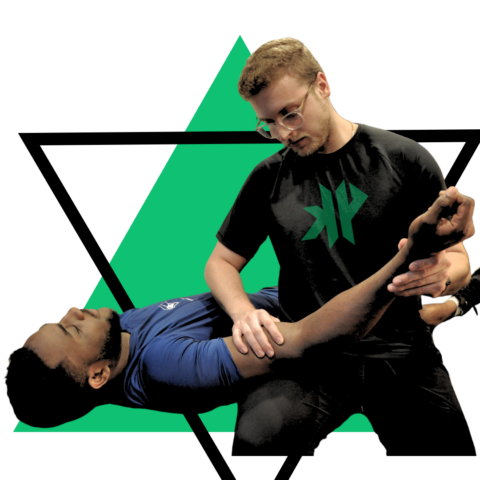
Every pitcher that walks through our doors is evaluated as a system. How does the scapula sit at rest? How does it move when the arm flexes or abducts? How does the throwing shoulder differ from the non-throwing side?
These aren’t small questions, they’re the difference between chasing pain and solving it.
We’ve seen athletes struggle after months of “shoulder work” elsewhere, still frustrated that nothing changed. Often, no one ever looked at the scapula. The athlete was misdiagnosed!
When you understand how the shoulder blade interacts with the thoracic spine, rib cage, and arm, you realize that treating the cuff without addressing the foundation is like patching drywall without fixing the studs underneath.
You need to find confidence in your assessment. Thats step 1. Assuming your engine always has a problem when its really the bolts holding it in place can cost you 1000s in mechanical fees. If you are constantly getting the wrong diagnosis then you are wasting both your time and money. This is the number one mistake we see from parents and players. They assume ALL Physical Therapists have the experience needed to make the right decisions. The reality is that most don’t.
Treating baseball pitchers is unique and if you are one that requires attention then you need to find a trustworthy PT that can properly diagnose the problem.
Once diagnosed… well then its time to FIX the problem!
Step 2 To Tightening The Bolts… Picking The Right Tools.
Just like pitching mechanics or strength training, scapular control is a trainable skill.
We can build better timing, coordination, and endurance of the muscles that control scapular motion. The key isn’t just getting them stronger, it’s getting them ”smarter”.
To do this we need a battery of training exercises that actually retrain the supporting musculature to the scapula.
Serratus Wall Slides with Foam Roller
90/90 External Rotation Walkouts
Reverse Bear Crawls
Prone W to Y
Landmine Press with Shrug
(Talk about exercise solution examples and how we give our athletes a list of items to do through Kinnect)
It’s easy to think of physical therapy as something reactive, something you do after you’re hurt. But for pitchers, it’s one of the most powerful preventative tools available.
When we evaluate scapular control early, we don’t just look to prevent injury, we prepare to optimize performance.
This is exactly what separates average rehab from what we do at KineticPro Physical Therapy in Tampa Florida.
To Conclude
Tampa has become a hub for baseball talent, high school, college arms, and pros all chasing the same thing: staying healthy while finding new peaks in performance.
With that comes a wave of shoulder and elbow issues that often trace back to the same root causes.
That’s why our physical therapy process, in part, starts with the shoulder blade. We assess how it moves, how the shoulder fatigues, how it interacts with the rest of the body. Then we build our roadmap from there, not just to fix pain, but to make throwing feel effortless again… to find a new level of peak performance for each athlete that walks through our door.
It’s not about telling players to throw less! It’s about helping each pitcher understand how they can DO MORE!
A healthy shoulder isn’t about chasing flexibility or strength in isolation. It’s about harmony, how the scapula, shoulder, and arm move together under real-world stress.
Scapular Dyskinesis might sound like a clinical term, but in practice, it’s one of the simplest, most fixable issues that can derail a throwing career. The earlier you spot it, the faster it’s corrected.
At KineticPro Physical Therapy, we believe in using research-backed assessment protocols and real-world experience to create a plan that works for the athlete.
At the end of the day, every pitcher wants the same thing: to stay healthy, throw hard, and love the game for as long as possible.
Scapular Dyskinesis isn’t a diagnosis to fear it’s a signal. A sign that your body’s trying to tell you something before things get worse.
Whether you’re a parent worried about your kid’s sore shoulder, or a college pitcher trying to unlock a few extra miles per hour, understanding how the scapula works changes everything. We are focused on assuring we allow our athletes to play the game as long as possible. We are focused on peak performance and allowing our athletes to continue to continue to chase their dreams.
If you’re in Tampa and you’ve been chasing shoulder pain that never seems to go away, or if you just want to make sure your arm is performing at its peak, schedule an assessment with us at KineticPro Physical Therapy.
Our assessment process is the first step in assuring you get back on the field at your best. WE BUILD PITCHERS.