An Official Response: MLB Report On Pitching Injuries 2024 


Warning: this Response Report might cause you to see the game differently. 


We want to take a second and say we appreciate the data and the report itself. It is a massive discussion started in the game. This is not an anti MLB message. We are extremely grateful for the MLB putting this information out and sharing it to begin the conversation. We have been in touch with the MLB and appreciate their support of our mission! They agree, as we all do, the game needs change. The question is where do we begin to change it? 

Back in early 2024 I was interviewed as one of the 200 asked to weigh in on injuries in baseball. In December the report was fully published and I was disappointed with the conclusions that velocity and pitch design we causing massive injury spikes in the game. 

Instead of simply trying to tweet about the differences in opinion, I felt it necessary to elaborate on the fullness of why we feel data from the report represents a much different conclusion. So here it is, no barriers to entry, just free and ready to download.

We just ask 1 thing… If you believe in it please share it with a friend. 

This message needs to been seen, understood and heard. Our hope is this “Response Report” can be the first step to a brighter future in the game we all love. 


About the author:


My name is Casey Mulholland (Founder and Lead Developer at KP). Back in 2010 I was one of the top high school pitchers in my class. About 60 days before the draft and potentially becoming a 1st round draft pick I had Tommy John Surgery. Since then I have been on a mission to figure out why pitching injuries occur.
First I sought answers for my own career and then these questions lead me to starting KineticPro (“KP”) in Tampa FL in hopes to help others. We have worked with some of the games best arms and introduced the concepts of workload management to athletes all around the world. Our mission is, and will continue to be, to build a healthier game for the next generation. We know there are many stories like mine of dreams never realized due to injury in baseball. Our hope is that you will join us in sharing the message and bringing forth the needed change within our game. Let’s #ClimbTheMountain.


Lessons Don’t Work… 


We live in a world today where unsupervised play doesn’t exist. Local parks have become “rentals” and local kids only play sport while Mom or Dad have a watchful eye on the process. Kids used to bike around their neighborhoods. They used to meet up at local parks and they used to organize sports amongst each other. There is a book called “Raising Empowered Athletes” by Kirsten Jones and she points to 2 major major things that drove kids away from unsupervised free play…

  1. Child Abduction and the circulation of wide spread news that it could happen.
  2. The onset of 2 income households. Gone were the days of a parent at the house while kid ran off to play.

Parents have dumped their kids into “after school programs” to accomplish both baby sitting and custom curation of a child’s play curriculum. Past the after school program we see a stark uptick in travel sports where it is obvious to see the continual focus on parent supervised play more routinely.

Parents want “better for their kid” and believe the way to give that to them is by designing a world for them where their attention is on a skill that the parent believes is useful. Most parents will tell you they want their kid to choose what they want to be in the future and that they want to be supportive of what ever the kid find “passion” in. Then you look at what the parent has signed the kid up for and the schedule the parent has created. It becomes obvious to what path the parent is pushing the kid down, in hopes the kid becomes “passionate”.

“Snow Plow Parents”, a term I once heard from Todd Bean who authored a book called “Clear Coaching”, is the term most useful to describe this parent. They are out in front of the kid trying to assure the pathway to “passion” and “success” is a smooth one that has no bumps along the way.


This “Snow Plowing” though is exactly what is leading the next generation to failure and internal struggles with confidence.

In pitching specifically today we can see the ramifications of a generation unable to explore freely or think outside the adult guidance in the room.

The coaching style, adopted by most in the game today, drives a wedge between opportunities of true individualized skill development and bias ideology of what a coach thinks is the “perfect form” for the athlete.

Coaching in baseball has largely been an oral tradition over the years. Coaches build bias based upon their own experiences playing or their own education from other coaches during their playing career. It’s like a game of telephone in many cases.

Coaching in baseball has largely been an oral tradition over the years. Coaches build bias based upon their own experiences playing or their own education from other coaches during their playing career. It’s like a game of telephone in… Share on X

A coach today teaches a philosophy that he learned from his coach 20 years ago. His coach learned that same philosophy from another coach 20 years prior to that. So on and so on, we begin to realize that information we are learning today in many cases has been passed down through 2, 3 and even 5 generations.

When seeking justification for a philosophy most coaches say something like “Well (enter player name) did it… if this was good enough for him then shouldn’t it be good enough for you!?”. This is a non answer and an attempt to deviate from the actual complexity of the issue. Many times coaches themselves haven’t considered that what they have learned, might be wrong. What they have taken to be reliable insight could in fact come from the unreliable opinions of others. Thus faced with questioning from their athlete they revert to a non answer in hopes to deter the conversation from expanding to substance.

Now before moving forward I want to be clear about something. This post isn’t to bash oral tradition or the way things have been done in the game. There are great things passed down generation to generation within the game. Many of these oral traditions or philosophies do carry merit and the true art of coaching should be highly praised . Experience in the game and learning how to translate those experiences is as stated, a true art.

Good “coaching” requires great buy in and the highest levels of relationship building. Some coaches change players lives through the art of story telling. They have a process that has impacted careers and many of these individuals are highly observational. Observation alone though isn’t enough in todays game. With continued advancements in skill acquisition research, growing technologies and a continued growth in snow plow parenting, the approach to coaching in baseball needs to change. Our athletes today find themselves in a divide. We call it the vicious cycle…


The Vicious Cycle

-Snow plow parenting.

-Finding a magic pill.

-The need for instant gratification coaching.


Snow Plow parenting…

-Kid never learns to fail

-Kid never learns to self explore physical skills

-Kid is behind the 8 ball by the age of 16 due to lack of skill diversity

-Parent is frustrated and starts seeking for ways to give their kid an edge as the kids peers mature and the game passes their kid by.


Finding the magic pill…

-Product marketing is aimed at the desperation of parents and players to improve the skills the player is most judged by… (ex. Velo, Exit Velo, Stuff…)

-Once parents buy into a product or philosophy the parent goes through magic pill over magic pill trying to boost performance and give their kid an edge… (ex. new bats, cleats, glove, training aids, supplements, instructional videos or books…)


The need for instant gratification coaching…

-The parent becomes desperate. The player needs to improve and they begin to feel opportunity to play the sport at a high level is coming to a close.

-The parent believes the kid needs the most elite level coach to solve the problem to why their kid is falling behind.

-The parent hands the kid off but the damage was already done. Due to the years of snow plow parenting and magic pill hope the kid doesn’t know how to be coached. The kid and parent come in with a noticeable desperation that permeates the undue pressure on the kids shoulders.

-The assessment gets done, the problems are identified, the process is set in place to fix the problem. The problem though? The kid cant self educate and they look to the coach to solve the problem for them. Why? Every coach they have ever had does this… gives instruction to every pitch, exclaims subjective successes through the session, makes the kid feel they are always having success and never letting them evaluate failure. When a good coach forces them to face failure, communicate and self explore, the kid is simply unable to do any of these things thus leading to quitting or blame of the coach for “not coaching”.

When a good coach forces them to face failure, communicate and self explore, the kid is simply unable to do any of these things thus leading to quitting or blame of the coach for “not coaching”. Share on X


So how do we fix this vicious cycle?

At KP we believe to solve this problem we have to reconstruct the skill development model within baseball. We have to rethink our system and set new standards for real, applicable instruction.

Today the lessons model permeates private coaching and private coaching is what influences/ markets the industries philosophies.

Lessons today go something like this… kid shows up, instructor has the parent or kid pay their money for the hour. Instructor has the kid throw a pen and barks some insights as the player goes through the pen. The coach is using their eyes to watch the ball move or how the players mechanics look. A pitch will be a bad pitch and the coach will say “no not that one!”, then another pitch will be a good one and you’ll without fail hear the coach say “yes that was it!”, as if the request of the coach has been met and the kid has somehow showed a sign of major improvement in a single pitch.

Pens last maybe 30 pitches and the coach finds some ways to be creative in filling the hour purchased. This could mean some story telling, some general conversation or some non specific drills. The kid ends the hour and thanks to all the success affirmations the kid leaves feeling successful. At the end of the day the coach wants the kid to come back next week so they feel they have to remind the kid of those successful affirmations and deter them from dwelling on the failure of the session.

The kid and the coach schedule again for the next week and the lessons repeat like this week over week. Every week something new to work on, every week the kid being told they are getting better over the 30 pitch session and ultimately the kid ends up with zero understanding of the process. If the kid struggles in season the parent or player will want to do a “little check up” with the private instructor because they feel any lack of success on field is just a lesson away from being fixed by the coach.

If you go out to a little league field we see this play out in the way of volunteer coaching at team practices. There is always a kid unable to hit the baseball during batting practice. You’ll watch a handful of parents offer an unending amount of insight to the 8 year old who cannot even tie his own shoes well yet.

“Elbow up”

“Make sure you keep your eye on the ball”

“Spread out your stance a little bit”

Pitch over pitch the poor kid gets a new “thing” to think about or a change to his batting stance. We want the kid to hit the ball so bad and we try everything we can to tell him how to do it. Sometimes it even comes to a parent running up to the plate and grabbing the bat with the kid only to hit the ball “with them” so that the kid can feel what it is like to hit the ball. To assure this moment isn’t awkward everyone cheers as if the kid “did it themselves” and without fail the kid stands there in confusion or disgust.

We struggle to let kids fail. We struggle to see the future in our actions when we don’t allow kids to fail. We don’t understand that by grabbing the bat and hitting the ball for the kid we aren’t helping that kid. We are actually telling that kid that we don’t believe that they can do it.

We struggle to let kids fail. We struggle to see the future in our actions when we don’t allow kids to fail. We don’t understand that by grabbing the bat and hitting the ball for the kid we aren’t helping that kid. We are actually… Share on X

By trying to give the kid a solution after every failure we remove the ability for the kid to self evaluate and problem solve to find his own success. Why do we do this?

The reality is that it takes repetition, lots of repetition. To wait long enough for the kid to problem solve how to hit the baseball might substantially stall practice. You might have a team of 8 year olds bored on the field and everyone catering to the need of 1 kids requirement of time to develop. We don’t get that and we all know what happens if a team of 8 year olds get bored.

The reality though kids need practice and lots of it in environments where they have ample time to fail and explore. They need safe places to challenge themselves and not be afraid to “do bad”. No parents reacting to a missed fly ball, no over coaching after swinging and missing 10 times, kids need free play and time to develop new skills.

See the problem with the lessons model yet?

Lessons allot 30 pitches or so, which is not nearly enough volume to improve any skill. Coaches want you to come back so their focus is not in letting you fail during all 30 pitches. They feel they have to show you progress and affirm some sort of success other wise you will go see someone else. These coaches tell you that you are doing great and find creative ways to express your improvement even though their was no measurable improvement. They over coach pitch to pitch because you are paying them to do something and you feel if they were just watching for an hour that you got ripped off.

This is the problem though. This structure leads to over coaching, it leads to no real understanding how to develop skills and ultimately it sets the kid up for a reliance on the pitching coaches magic wand for a lifetime. The reality is kids need REAL coaching, not a magic wand.

Real coaching isn’t always telling you what you want to hear, real coaching takes time and is done over large amounts of repetitions. Real coaching doesn’t happen once a week or even twice a week. Real coaching consumes the athlete and energizes the learning process 24/7. Real coaching is relational and not transactional. Real coaching is long term focused not seeking quick fixes along the way. Real coaching requires “Training”.

Kids need “training” not lessons.

Kids need training and training means time. Its easy to identify the weakness in the lessons model but lets talk about how training works and why the approach to training properly is the only actual way to yield results when discussing skill development.

We have a skill acquisition model at KP. It’s is Assess, Feel and Drill.

Most people walk into a training facility and think about it like a doctors office. You go in, you get assessed and you get prescribed some drills to “fix” your problem. The reality is that drills are worthless unless you can first understand the Assess and explore the Feel.


Assess

On assessment day a KP we bring our athletes in and objectively measure things such as, body comp, ball flight, biomechanics and throwing workload. From there our team sits with the athlete and reviews what we see as points of focus.

Now the key here is in the detail we go into when explaining the problem and educating the athlete on the reason it is a point of focus for us. Athletes generally just sit and listen to the analysis wide eyed and excited about the data. For most this moment of “getting evaluated” is something they felt they needed to do.

We explain to them at length the problem and don’t hold back on the research. At the end we always ask “any questions?” and without fail most athletes just shrug saying something like “no it all sounds great I’m just ready to get started”.

For these athletes that have no follow up its easy to see there is excitement for the process however there is no retention of the substance.

From our dialog we can always tell who understands how to train and who doesn’t. Without fail the guys that have no questions are the guys that most often expect we will “do it for them”. The guys that do actively look to ask questions to better understand, are the ones who are wrapping their heads around what they need to do before they dive into the training process with us.

In the assess phase of our skill acquisition model its critical the athlete asks questions and learns the requirements of the skill to the highest level of detail. Failure to fully comprehend the Assess phase of our model means that an athlete will be unable to think creatively about how to solve the problem at hand and they will be unable to identify right from wrong when attempting to put the skill into action.

Athletes that have been raised by a parent or coached since a young age by coaches who do not take the time to fully understand the skill put a kid in a tough position. A lot of parents or coaches bark orders or constantly recommend change in hopes their words somehow teach the kid how to do the skill. There is no deeper digestion of the complexity that is the skill. There is no aid in education on how to compartmentalize the the separate actions of the skill. The kid is unable to understand what to analyze or strive for.

Its the instructor that constantly leaves each session finding a silver lining in hopes to give the kid a feeling of success. This instructor is failing to teach the kid how to self analyze. The instructor has created an environment where the kid will see the instructor as a genie, not a coach. The difference is a genie can magically fix things and grants success session over session in a linear progression of made up success. A coach however allows his athletes to grow. We often identify growth by success but the reality is growth happens through failure. A good coach recognizes this and creates the environment or the tasks necessary to allow the athlete to experience failure in the right way to learn how to find success. Good coaches know this takes time and are ok with days, weeks, even months of failure.

Identifying genies from coaches is pretty easy. It often times just comes to substance. Do you fully understand the skill at hand or not. Assessing someones skills objectively is why technology in the training environment is so paramount. We need useable feedback. We need a way to understand on a deeper level the finer changes we make over long periods of time. Technology holds us accountable to bias. Its often that even a good coach wants their player to improve. They will sense their frustration and a good coach will want a player to grasp the skill in hopes to keep pushing this athlete. Reality is with technology you cannot hide the lack of change. Good coaches love technology because it holds no bias.

When we move through the Assess phase we must hold no bias. We must educate to the depth of the skill as coaches. Players have to be receptive. They have to seek the concept on a deeper level. They have to fully comprehend the goals and requirements of the skill before moving to the next phase. Once they grasp the skill from an educational perspective it is time for the Feel phase.


Feel

I will never forget walking down the cereal isle at our local grocery story when I saw a kid in baseball uniform pretending to throw. While his mom inspected the cereal label the maybe 13 year old was deep in thought considering his hand position when throwing. He would stride out and put his hand up by his ear. As he landed he would make “fangs” with his fingers and focus on pointing his hand away. Clearly he had been taught to turn his hand away at the time his front foot would hit the ground. Clearly this wasn’t natural for him as he would correct himself time and time again through various repetitions. Turning around his mom said “stop that” and the kid jumped on the front of the cart to get escorted down the isle for more shopping.

Think about that incident for a second. We can all relate to the kid right? I’m an avid golfer and guilty as charged you can find me just about anywhere with an invisible iron in hand focused on the position of my left wrist at the top of my swing.

In my head the dialog goes like this, “keep the palm flat, keep the palm flat, keep the palm flat” then I reach the top of my swing and decide if my swing felt comfortable or not. I try to decide if I can repeat that cue and accomplish the swing I want or not. This is what the 13 year old was doing at the grocery store. He wasn’t saying anything but you could almost read his mind, “fangs back, fangs back, fangs back”. He had a cue he was considering and was trying to associate that cue with a specific movement that would yield the throwing motion that his coach wanted.

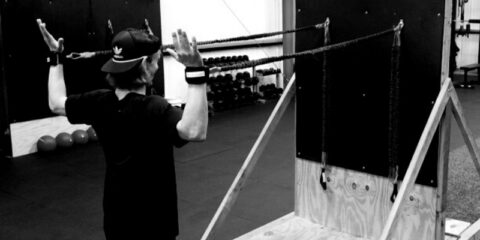
The Feel phase is not an actual throw. It is the consideration of the throwing motion. Its a moment for our brain to work through the process of the throw and assign cues that will make the possible throw successful in change. “Feel’s” as we like to call them are non throws that help the athlete create an awareness for a cue that will translate to accomplishing the throw in the way we want. Most products such as water bags, belts, towels, pvc pipes… etc are all just items that we would assign to the Feel phase to help build awareness of a cue to translate to throwing. All of these items mimic the throw, they help an athlete consider the throw but they are not however the act of throwing.

An illustration of this comes from research showing the variance in mechanics when an athlete performed throws with a towel vs their actual throws with a baseball.

A research article labeled “Shadow pitching deviates ball release position: kinematic analysis in high school baseball pitchers” explains the following…

“Although shadow pitching, commonly called “towel drill,” is recommended to improve the throwing motion for the rehabilitation of pitching disorders before the initiation of a throwing program aimed at returning to throwing using a ball, the motion differs from that of normal throwing.”

These modalities like towel drill all elicit similarities to a throw and have their place in offering conceptual knowledge for an athlete to understand the skill deeper. These Feel’s offer some feedback and allow the athlete to conceptually begin to design cues that hopefully bring success in the early stages of the Drill phase.

This will be a controversial statement as many want to believe that certain modalities do more than this. When focused on mechanical patterning it is important to express the patterns we actually find in a throw. It has to be asked, if we aren’t getting into the same ranges of motion, we aren’t replicating the same timing and we aren’t moving segments in the same speeds as we find in the skill, then are we actually practicing the skill?

No. We are instead doing something similar to the skill in order to gain awareness for the actual Drill phase. There is nothing wrong with using modalities but once the athlete has grasped the basic conceptual cue the modalities can probably find a storage box for another athlete at another time.

There is nothing wrong with using modalities but once the athlete has grasped the basic conceptual cue the modalities can probably find a storage box for another athlete at another time. Share on X

Whether you are a kid in a grocery store doing dry reps behind your mom in the cereal isle or you are using a water bag to better understand lead leg at your teams practice, you are establishing a cue and practicing in the Feel phase. Your next step is to take your cue and apply it to the actual skill within the Drill phase.


Drill

A video came across my feed a few weeks ago and it showed a guy on a factory line sorting boxes faster than I believed was humanly possible. Hundreds of boxes coming at him sorted in lanes by color. Red to the right, green goes up, brown goes down and he repeated that cycle over and over and over for minutes at a time. It was unbelievable. He did it so effortlessly. It was second nature to him, like he wasn’t even thinking as he executed.

How many years must he have practiced this on this same line to become this fluent? In skill acquisition research there is a term for this. Its called being “autonomous”. Thats the ultimate goal for any skill. We want to be able to perform the skill without thinking about it, we want the skill to become “second nature” or “effortless”.

The Drill phase is the practice of the actual skill. To get here we have built the education of what the skill is supposed to look like and we have established a cue to put to the test. We want to work through constraints to assure we implement and test the cue in environments that allow for a successful progression of the skill to autonomy.

In the Drill phase we work from the most constrained drill to the least constrained drill.

We simplify the task or modify the environment to give the athlete the best chance at success when testing their first throws with a new cue. The drill begins and the cue from the Feel phase will be tested in these steps…

  1. The athlete will identify the task that is the drill and consider successful execution of the skill.
  2. The athlete will begin the throw using the adopted cue from the Feel phase.
  3. They will complete the throw and self evaluate “good” or “bad”, meaning success in the execution of the skill or failure.

Throw over throw this feedback loop permeates. Another throw, “good”. Another throw, “bad”. Dang. Another throw, “Good”. Ok we have it now. Another throw, “bad”. Ahhh!

If too many “bad” throws are made the athlete pauses. The athlete reverts back to the Feel phase. You can see them talking with the coach, doing dry reps, watching a video on youtube on how someone else does it do come all to come up with another cue that might yield more success. They know what they are trying to accomplish but are battling to find the right cue to execute it. Then a break through.

The new cue worked and now the athlete is “good” on every throw in this most constrained position. It’s time to move on to loosen the constraint. Maybe this is going to another drill. Maybe this is going to more of a full throw. This is where the art of coaching comes in. Setting up another environment or task to give this athlete a better chance at taking a step closer in success to achieving autonomy in time.

To master these constraints might take months of failure at times. It’s ok. Moving the athlete during that period from Feel to Drill, testing the process meticulously, and holding your standard up to success is all key to bring change to the skill.

To master these constraints might take months of failure at times. It’s ok. Moving the athlete during that period from Feel to Drill, testing the process meticulously, and holding your standard up to success is all key to bring change… Share on X

The least constrained “drill” we can have is a pitch off the mound. Our goal as coaches is to develop the path from most constrained to least constrained in the skill. We need to guide our players in the process allowing them to learn from failure each step of the way. We need to equip them with the tools necessary to not stall in failure. This stalling leads to many guys walking away from changes due to discomfort and failure.

I’ll never forget watching an MLB pitcher at KP try to improve a change up one year. The change was so simple. He had to move his index finger down on the baseball about a half inch to induce a bit more arm side run.


We stepped off to the side and I went through the process.

Assess- I showed him the Trackman data and the need for more arm side of the change up. I educated him on both what horizontal break was and how we would create more with a slight grip adjustment.

Feel- I got him with a baseball in hand. We set the grip and he played around with what it should feel like at release. We talked about cuing “stay inside of it”.

Drill- I had him start off throwing to an outfield screen to see the shape and remove the concern of command. Then we moved to catch play with me at 70 ft as a partner to exaggerate the feel of the movement. Lastly her got on the mound and started throwing it with a catcher.

It was in my mind the perfect progression and the MLB player was seemingly grasping the concepts quickly. Then the objective data came…

The Trackman data was ok but not quite where I hoped it would be. Then he threw about 5 balls glove side. I realized he got frustrated with the result even though we had only thrown a few. It dawned on me he was looking for immediate gratification. A few more pitches with the same result and he turned to me saying “I can’t do this I don’t feel comfortable”. Right there on the spot he reverted back to his old grip and proceeded to throw terrible change ups the rest of the session. He quit on the skill development and reverted back to his comfort zone.

Slight failure deterred an important change for this athlete. Maybe he was blind to his prior success, maybe it was a change up he was taught by another coach at an early age and he felt he needed to hold onto it, maybe he tuned out and just appeased me when I explained the importance of a better change up in the Assess phase. Maybe, maybe, maybe.

It is funny that sometimes we as coaches can set up the perfect process but yield no result. We are so hard on ourselves sometimes when an athlete “doesn’t get it”. There are so many factors that define success, especially as an athlete gets older.

For my MLB pitcher trying to learn a change up. I desperately wanted him to learn that change up and find success with it. During his failure I sat quiet and let him sort it out. Could I have jumped in to interject cue reminders? Sure. Could I have stopped his session to get hands on with the grip? Sure. Could I have completely adjusted the environment to give him the illusion of success with the pitch? Sure.

What I knew was that if we really wanted this change to last it would take a great volume of practice. What this player did in about an hour would have to be repeated daily for weeks to truly get “comfortable”. Quitting after 5 pitches meant this player just didn’t grasp how to learn and wasn’t really committed to making a change. He gave me a chance to do it for him but I couldn’t and I wasn’t going to pretend I could.

It doesn’t matter the level of the game. What players are taught at a young age goes with them through their career. They ride their talent and natural abilities until confronted with the idea that their career could come to an end. Then its panic, some spiral their career to its end and some reset with an open mind on change only to resurrect their career path.

It shouldn’t take the fear of a career ending to wake us up. The game needs change. We need to teach athletes at a young age how to learn. We need a better development model for skill.

Assess.

Feel.

Drill.

It takes days, weeks, months of practicing the skill.It’s time we train. It’s time we shift our perspective. It’s time we give our athletes the tools necessary to develop their skills.

True change has to happen with rigorous, consistent work. Not just 60 minute lessons with success affirmations from some genie once a week.


Want to get started training with KP? We offer both remote and in person training (Tampa FL). 
To get started with remote training: Click Here 
To get started with in person training: Click Here
 

Want more KP? Be sure to check us out on our social media channels…
Youtube: @KP3
Twitter: @Kinetic_Pro
Instagram: @KineticProPerformance

Assessing Pelvis Rotation In Pitching


Ok… What is the “Pelvis”? If you aren’t 100% sure then we should probably start here.

Lets ask ChatGPT…

“The pelvis is a complex bony structure located at the base of the spine, which serves as a crucial support structure for the human body. It is composed of several bones that are fused together: the two hip bones (also known as coxal bones or os coxae), the sacrum, and the coccyx (tailbone).The pelvis is essential for many bodily functions, including locomotion, balance, and the protection of vital organs.”


Now that we understand what and where the pelvis is, lets talk about what Pelvis Rotation in pitching is.

At KineticPro we identify and correct mechanical issues in a 3 step process. Below we will dive into each step explaining what to look for when evaluating and correcting issues with trunk rotation… 


1. Assess

  • To establish what an “open pelvis” might look like we have to first determine what a normal range for pelvis rotation might look like. Here is a video with our good friend Dr. Mike Sonne. Dr. Sonne helps us dive deep into how the pelvis works and gives us a better understanding on how to assess the pelvis. 

Now that we are equipped with the understanding of how to Assess the pelvis let’s move to our next category, “Feel” in our mechanics progression. In Feel we will begin to talk about how we would actually go about making a change to someones pelvis rotation. 

2. Feel

Feels are movements we specifically have designed to deliver the specific “feeling” of a moment. The goal behind feels should be to help an athlete identify the right movement while allowing them to reinforce cuing to execute the needed movement in the throwing motion. Lets look into what feels can potentially help us understand how to fix the issue of Trunk Rotation… 

NOTE: Feels should be the time a coach can teach/ educate or an athlete can wonder. It’s an athletes time to define “good” in movement and start to create “cues” that might possibly help them create the outcome they are looking for in the movement.

Lets look into what feels can potentially help us understand how to fix the issue of Trunk Rotation…

Elevation Feels- 

We like Elevation Feels because with the stick they provide stability for controlled movements. The goal of elevation feels is to provide control while exploring the positioning of the pelvis in the initial moves from peak kick. A reminder that this is to simply provide a cue or cues to begin the drill process with. 

3. Drill

Drills are where we begin to introduce the feeling or cue into the throwing motion. We move from most constrained to the least constrained of drills in order to transfer the correction of movement to the mound. Our goal is to get comfortable with a new movement and through time in drills we can begin to release the active thought associated with the drill thus transferring it to the movement we will see during competition. 

NOTE: Drills do not fix the problem. Drills are created to help an athlete build more conscious corrections to the problem. We simplify the movement and give the athlete a better chance at success by constraining the movement. IF you are not actively evaluating the movement to determine if the cue you are using is working then you are ultimately not getting much from the drill itself. Athletes must develop a quality feedback loop and understand what they are looking for to determine if a movement can be defined as successful. Video, 3MotionAi or other objective tools are a necessity for improvement. The coaches “eyes” are subjective and should not be your only source of correction/ approval. 

Elevations-

Hop Back Throw-


Want to get started training with KP? We offer both remote and in person training (Tampa FL). 
To get started with your pitching development in Tampa FL: Click Here
 

Want more KP? Be sure to check us out on our social media channels…
Youtube: @KP3
Twitter: @Kinetic_Pro
Instagram: @KineticProPerformance

Official Partnership Announcement


It was 2022 and we were walking around ABCA when we bumped into a product that was a bit different but matched the description of something our team was on the lookout for.

That year we had blown through 12 command targets and it started to become frustrating. Soft aluminum frames, cheap netting. The list went on and on to how we could immediately tell the life expectancy (or lack there of) from the products in the market.

We were on the look out for a product that could handle the rigors of our day to day activity when we stumbled upon BP Zones.

BP Zones looked different and after some dialog at their booth we were assured that we “couldn’t break it”. It was almost a challenge and we had some arms lined up to close the pro off-season that would put it to the test. So we purchased and begun putting hundreds of pitches on it weekly.

Was it indestructible? No.

Did it last far longer than any of the other products we had tried? Absolutely!

The original frame still to this day is in perfect shape. We’ve blown through some flaps but we have to say the BP Zones team has been innovating and even now their reinforced flaps are far better.

For the every day facility owner, coach or even a player who just throws to a target in the off-season, this is such a superior target. The life expectancy on it is incredible.

BP Zones has been all over social media, from The King Of JUCO’s YouTube channel to some of the top facilities in the game. You can find BP Zone becoming a staple in bull pens across the industry. 

At KP we like use 2 different configurations of the different model zone frames and it’s been a game changer for us not having to constantly reorder 2 new command targets monthly.

We felt it was important to jump right to discussion of the quality of the product first in this post because in full transparency it’s the #1 reason we feel you should buy it. With quality out of the way though let’s talk about why we are choosing to partner with BP Zones and how we intend on leveraging their support to solve some really big questions in our own research.

Over the last year at KP we have been focusing on how to better understand command. We’ve been trying to better measure it and more importantly better influence it. 

It’s no secret that throwing to a target is more challenging than throwing to a catcher. For over a year now we’ve wanted to know how much more challenging though.

We also want to know if this challenge brings positive change in the pitcher. Meaning if throwing to a target is more challenging, do our pitchers get better because of the challenge? Or do they get worse?

BP Zones providing different size targets, adjustable flaps on targets and the longer lasting durability means we can measure changes and we can stay consistent with our project over a longer duration of time. We anticipate a lot of content over the next few months on these projects around command. With the support of the BP Zones team we hope to challenge the rhetoric and showcase how you can leverage great tools like their zones to improve command. 

We are excited to highlight more our findings in our research projects as well as detail a full list of research projects as the come to light. Head over to our Youtube channel as subscribe to get the lates updates from our projects as they are released.


Subscribe To KP On Youtube Here

 For more on BP Zones you can visit their page https://bpzones.com/

Use promo code “KP10” for 10% off your next purchase. 


A decorated prep & collegiate athlete, Gunnar Hoglund, struggled to find his footing in professional baseball due to a Tommy John Surgery shortly before the 2021 MLB Draft. Out of high school Gunnar was a first round draft pick but chose to attend the University of Mississippi. After breezing through 3 straight years in college at Ole Miss it was expected he would continue this upward success through the professional baseball ranks. As mentioned though the road to success coming off of Tommy John Surgery was a long one for him. Once healthy, Gunnar found himself having to reset his focus on the aspects he felt hadn’t quite returned to shape. Fastball velocity, overall health, and sustaining consistent ball flight were all top of mind going into the 2023 winter off-season. 

At KP, ahead of the off-season, our staff dove into opening up what made Gunnar successful in the past and began to devise how we could establish a winter roadmap that would help Gunnar return to form, ready to compete in 2024. As the title obviously states, he had a great year. Here is how we set up his off-season to lay the foundation for this success…


Workload

Since the draft Gunnar had been through different rehab protocols, a trade and a flurry of attempts to keep his return to play pace slowed in hopes of protecting him. The truth though? All this effort to limit throwing intensity and limit outing length once he was deemed healthy really only hindered his ability to create the necessary adaptations to the load he would be facing in a regular season schedule. Our first priority this off-season was to assure Gunnar would be built up to handle the 2024 season. 

We knew that if Gunnar pitched well this year he would have a chance to start the year in AA. Looking back over our historical data that meant that with a throwing program built for him on a 5 day rotation he would need to reach at least a 15 throwing fitness by spring training. 

We started in November and built him up to just that before he left for spring training. Here is an example throwing program plan we used for him…


Stuff 

To begin the 2023 off-season we needed to look back and evaluate what potentially needed to improve in Gunnar’s arsenal. In College he predominately threw a 4 seam-fastball (61%), slider (31%) and a changeup (9%). 

It’s important to note when evaluating any arm that the level of competition can sometimes dictate a usage change in a pitcher’s arsenal. With Gunnar returning from Tommy John but now competing at a much higher talent level, we did have to ask if the level of play was contributing to a lower level of success for him. 

The other question to ask was surrounding Gunnar’s actual health. After a long time in the rehab process athletes can often struggle to return due to things aside from just the arm. Atrophy is real and when athletes are focused on arm health, sometimes they forget about their overall development in the weight room. 

Looking at available data. We wanted to see areas where we might find major changes in Gunnars historical data. We asked the question, did he actually return to the player he was in 2021 or had he not?

If we could first identify this then we could establish a plan to get those metrics to return. Beyond this we would then have to plan for ways to optimize Gunnars development further to give him the best chance at finding success once again in 2024. 

Upon a deep dive into Gunnars data the first obvious area of change for Gunnar was in Fastball velocity. In 2021, pre-injury, Gunnar had an average FB velocity of 92.5. Post surgery, this declined to roughly 90mph for both the 2022 and 2023 seasons. 

FB Velocity

FB Velo (by year)
2021 (College): 92.5
2022 (Pro): 89.8
2023 (Pro): 90.8
2024 (Pro): 92.2


Fastball velocity was an obvious problem but for us indicated that he might not have been built up enough or lacked just the general strength he once had. Many would jump to conclusions here and want to make this a mechanical problem or feel the need to push a velocity program. There was no need for a velocity program here and his biomechanics reports from season didn’t indicate a need for anything but some minor changes to his plyocare routine. We had confidence that with a quality workload based throwing progression and a good off-season pushing him in the weight room that this velocity would return. 

After 4 months going back to the basics of managing his throwing workload and developing his strength, it’s obvious to see the velocity did return in 2024. A major win to begin his return to success in season. 

So velocity was back and this meant the fastball was in a much better place for the upcoming season. Our staff had to decide what else we would want to improve to give Gunnar the best chance at a breakout year in 2024.

Enter the less efficient change up… 

At the onset of the winter we approached Gunnar with some ideas on his change up. We started messing around with the idea of adding depth and he was all for it! 

Now depth could mean a lot of things, possibly creating a splitter instead of a change up, it could also mean possibly creating a SSW changeup, or we could focus on a pitch that just completely messed with efficiency and lowered the magnus force of the pitch.

With Gunnar finding comfort and repeatability of the less efficient change up, we pushed forward to implementing into his arsenal. We utilized a 2-seam changeup grip that added a spike to the middle finger. We spike the middle finger to get dominance out of the ring finger which essentially pulls the lateral seam down (sideways) and creates a more horizontal axis to the pitch. Since the pitch interacts with the air less efficiently, it utilizes less spin and therefore, has more vertical drop than a typical changeup. The results form this change were spectacular this year:


CH metrics (by year):

2023
82.4 mph
12.6 vb
1:40 tilt
0.7 HAA
-7.4 VAA
2075 rpm
 
2024
83.5 mph
4.2 vb
2:24 tilt
-1.7 HAA
-7.9 VAA
1660 rpm
 

Major improvements across the board on the CH marked an important change in both FB velo and CH shape to close the winter off-season. The question, after the off-season’s improvements, would be surrounding the actual impact these changes would make on his success. Let’s look at some of his data from 2023 to 2024 in order to better understand the impacts of these changes. 


2023:
6.05 ERA
1.3 WHIP
9.9 H/9
6.8 SO/9
 
2024: 
3.20 ERA
1.034 WHIP
6.9 H/9
8.3 SO/9
 
ERA: Down from 2023
WHIP: Down from 2023
Hits Per 9: Down from 2023
Strike Outs: Up from 2023

Massive changes! What about his Fastball and Changeup though? Did they actually improve compared to the previous year? For this we will use xWOBA to measure improvements 2023 to 2024…


Fastball
2023 LHH: .359 RHH: .329
2024 LHH: .336 RHH: .268
 
Change Up
2023 LHH: .329 RHH: .392
2024 LHH: .240 RHH: .209


We’ve now explained the impacts of our off-season work surrounding workload and stuff. Let’s talk about the last major piece of our plan… Gunnars strength. 


Strength

What does it mean to get stronger? Is it adding weight to your deadlift? Is it just being able to jump higher? The industry is full of arbitrary measures of strength but strength is something developed over time. It is something that requires the consistency of an athlete and the proper progression of a well built program. At KP we use our “KP Lifting Score” to govern and assure strength development. 

Uniquely our score accounts for the exercise load, individual player body type, the movement of the exercise selected and tempo. 

Our focus for Gunnar was to increase his “KP Strength Score” and push him physically to get as high as he could on our scoring before the end of the off-season. Starting around a 40 Gunnar moved all the way to a 71 “KP Strength Score” over 11 weeks. This was a substantial progression and marked his overall strength improvement during this period. 


Conclusion:

As shown above Gunnar’s off-season development paid off substantially in 2024. Even with the successes this year, competitors like Gunnar seem to never be content. As the ‘24 season concludes, we understand that we are going to have a conversation about what is next. This is where finding the 1% needed change and uniquely deploying a program to improve that 1% in the duration of the winter becomes an art.

It’s back to the drawing board. How do we continue trending towards the best version of Gunnar Hoglund? What is it going to take to reap these similar results at the big league level? Answering these questions and working with Gunnar to bring to light the answers is what makes this process so exciting and rewarding in the long run. How good can Gunnar Hoglund get? We are appreciative to be a part of the journey to find out. 


Want to get started training with KP? We offer both remote and in person training (Tampa FL). 
To get started with remote training: Click Here 
To get started with in person training: Click Here
 

Want more KP? Be sure to check us out on our social media channels…
Youtube: @KP3
Twitter: @Kinetic_Pro
Instagram: @KineticProPerformance

Introducing Our New Course: Winning With Workload

Workload management is one of the most important and often overlooked aspects of pitching. With the right approach, pitchers can enhance performance while reducing the risk of injury. Our newest course, Winning With Workload, is designed to help you understand and apply the principles of workload management.

This course dives deep into the science and practical application of managing throwing workloads. It covers everything from why traditional pitch counts aren’t enough to how fatigue plays a role in injuries. 

Here’s what you’ll find in the course:

  • Understanding Fatigue: Learn why fatigue is the number one factor behind throwing injuries.

  • Assessing Workload: Discover how to track and calculate daily throwing workloads, accounting for both game-day pitches and all the other throws that add up.

  • Progressive Programming: Explore multiple course modules designed to build throwing fitness while avoiding overuse.

  • Dynamic Adjustments: Understand how to adjust workloads in real-time based on a pitcher’s readiness, helping to optimize performance while reducing injury risk.

  • And More: Winning With Workload includes practical units explaining how to use our free player app to manage workload, discussions with influencers in the game around the topic and so much more… 


Winning With Workload is now part of the KP3 Community.

What Is the KP3 Community? The KP3 Community is a space where players, coaches and parents come together to explore advanced baseball topics like biomechanics, workload management, strength and other player development topics. Here’s what you can expect:

  • New Content Regularly: Access new courses, articles, and resources designed to keep you learning and improving.

  • Expert Insights: Gain knowledge from some of the top minds in baseball and sports science.

  • A Community of Learners: Connect with others who share your passion for the game.


What does KP3 Community cost to join?

Payment options for KP3 Community include:


Annual Access: $99.99/year

Lifetime Access: $299


Both options include unlimited access to courses “Winning With Workload”, “The Future Of Arm Care” and future course releases. 


Ready to Dive In?

If you’re ready to implement and understand workload management, our course Winning With Workload is the perfect place to start. Join the KP3 Community and see how throwing workload can help you stay healthy/ perform at your best.

Dive deep into our other KP3 Community courses and learn about player development topics that are pushing the front line within the game today! 


Get Started With KP3 Community


Shoulder Blades, Mobility, and Pitching: The Hidden Link That Keeps Arms Healthy

Most pitchers and their parents hear words like rotator cuff or labrum in an office and immediately brace for the worst. But the truth is, the story of a healthy shoulder doesn’t start with the cuff or the joint at all.

It starts with the shoulder blade the scapula.

You might not know it but… the scapula is the unsung hero of any successful pitcher.


Tighten Those Bolts up!

In the shoulder the scapula connects the upper arm to the body and provides the foundation for nearly every movement the shoulder makes.

When the scapula moves well smoothly rotating, tilting, and gliding, the shoulder can create and withstand incredible forces safely. But when the scapula isnt working quite right, the entire throwing motion can start to break down.

When the scapula isnt working quite right clinicians often diagnose it as Scapular Dyskinesis.

Scapular Dyskinesis is a fancy term for a simple concept: the shoulder blade isn’t moving or stabilizing the way it’s supposed to.

For an easy to remember example we asked ChatGPT to help us out and it said…

”For pitchers, Scapular Dyskinesis is like trying to throw a 95 mph fastball with loose bolts in your engine mount. You might get away with it for a while but something’s going to rattle loose at come point.”

So it seems according to ChatGPT we just need to tighten those blots up right!?


Step 1 To Tightening The Bolts… Diagnosing The Problem.

Scapular Dyskinesis doesn’t look the same in everyone. For some, the shoulder blade wings out dramatically when lifting the arm. For others, it tilts awkwardly, shrugs upward instead of gliding down, or simply doesn’t move in rhythm with the opposite side.

Those differences matter.

In a healthy shoulder, the scapula rotates upward, tilts posteriorly, and protracts slightly to support the humerus through a full throwing motion. It’s not just a piece of bone floating on your back, it’s a dynamic platform, constantly adjusting to load and motion.

When it loses control, the shoulder has to pick up the slack. Muscles that should be firing in sync start competing. The cuff overworks. The labrum gets tugged in ways it shouldn’t. Fatigue builds faster. Performance dips.

You would think that the moment something is out of wack you would get pain right? It’s not always pain that shows up first though. Sometimes it’s just a small loss in velocity, or a pitcher saying, “I don’t feel as loose today.”

We cannot take a one size fits all model in diagnosing the problem. It takes an experienced PT to identify the concerning criteria.

You don’t need a $10,000 motion capture lab to see scapular dysfunction. Sometimes, the simplest tests tell you the most.

Have an athlete lift their arm slowly without weight, it might look fine. Then hand them a 3–5 lb dumbbell and watch again.

That extra load often exposes everything. You’ll see the scapula start to wing out slightly, rotate unevenly, or lose rhythm as the arm lowers. That’s not just a coordination issue it’s a sign that the stabilizers (like the serratus anterior, lower trap, and rhomboids) are struggling to keep up.

If the control is solid without weight but collapses under load, that’s an endurance issue. If it’s poor in both situations, there’s likely a deeper motor control or structural problem.

Either way, the takeaway is clear: the scapula is underperforming relative to the demands of throwing and that’s a problem we NEED to fix.

Throwing a baseball is not a natural movement. It’s violent, complex, and asymmetrical by design.

Over time, the body adapts. Pitchers often develop greater external rotation in their throwing shoulder and lose internal rotation. That adaptation isn’t necessarily bad, it’s part of what allows for performance at a high level.

BUT… balance matters.

When those adaptations become excessive, or when the scapula doesn’t keep pace with those changes, trouble starts. The total arc of motion between both shoulders should remain roughly equal. If one side begins to dominate say, a pitcher has a total arc of 160° on his left shoulder but only 140° on the right as a right handed thrower, the system’s efficiency breaks down.

The result? Micro-stresses start stacking up, rep after rep, throw over throw.

And because these issues build gradually, most players don’t realize anything’s wrong until it’s already limiting their performance or worse… they get hurt.

At KineticPro Physical Therapy in Tampa, we never assess the shoulder in isolation. That’s mistake number one.

Every pitcher that walks through our doors is evaluated as a system. How does the scapula sit at rest? How does it move when the arm flexes or abducts? How does the throwing shoulder differ from the non-throwing side?

These aren’t small questions, they’re the difference between chasing pain and solving it.

We’ve seen athletes struggle after months of “shoulder work” elsewhere, still frustrated that nothing changed. Often, no one ever looked at the scapula. The athlete was misdiagnosed!

When you understand how the shoulder blade interacts with the thoracic spine, rib cage, and arm, you realize that treating the cuff without addressing the foundation is like patching drywall without fixing the studs underneath.

You need to find confidence in your assessment. Thats step 1. Assuming your engine always has a problem when its really the bolts holding it in place can cost you 1000s in mechanical fees. If you are constantly getting the wrong diagnosis then you are wasting both your time and money. This is the number one mistake we see from parents and players. They assume ALL Physical Therapists have the experience needed to make the right decisions. The reality is that most don’t.

Treating baseball pitchers is unique and if you are one that requires attention then you need to find a trustworthy PT that can properly diagnose the problem.

Once diagnosed… well then its time to FIX the problem!


Step 2 To Tightening The Bolts… Picking The Right Tools.

Just like pitching mechanics or strength training, scapular control is a trainable skill.

We can build better timing, coordination, and endurance of the muscles that control scapular motion. The key isn’t just getting them stronger, it’s getting them ”smarter”.

To do this we need a battery of training exercises that actually retrain the supporting musculature to the scapula.


Serratus Wall Slides with Foam Roller


90/90 External Rotation Walkouts

Reverse Bear Crawls


Prone W to Y


Landmine Press with Shrug


(Talk about exercise solution examples and how we give our athletes a list of items to do through Kinnect)

It’s easy to think of physical therapy as something reactive, something you do after you’re hurt. But for pitchers, it’s one of the most powerful preventative tools available.

When we evaluate scapular control early, we don’t just look to prevent injury, we prepare to optimize performance.

This is exactly what separates average rehab from what we do at KineticPro Physical Therapy in Tampa Florida.


To Conclude

Tampa has become a hub for baseball talent, high school, college arms, and pros all chasing the same thing: staying healthy while finding new peaks in performance.

With that comes a wave of shoulder and elbow issues that often trace back to the same root causes.

That’s why our physical therapy process, in part, starts with the shoulder blade. We assess how it moves, how the shoulder fatigues, how it interacts with the rest of the body. Then we build our roadmap from there, not just to fix pain, but to make throwing feel effortless again… to find a new level of peak performance for each athlete that walks through our door.

It’s not about telling players to throw less! It’s about helping each pitcher understand how they can DO MORE!

A healthy shoulder isn’t about chasing flexibility or strength in isolation. It’s about harmony, how the scapula, shoulder, and arm move together under real-world stress.

Scapular Dyskinesis might sound like a clinical term, but in practice, it’s one of the simplest, most fixable issues that can derail a throwing career. The earlier you spot it, the faster it’s corrected.

At KineticPro Physical Therapy, we believe in using research-backed assessment protocols and real-world experience to create a plan that works for the athlete.

At the end of the day, every pitcher wants the same thing: to stay healthy, throw hard, and love the game for as long as possible.

Scapular Dyskinesis isn’t a diagnosis to fear it’s a signal. A sign that your body’s trying to tell you something before things get worse.

Whether you’re a parent worried about your kid’s sore shoulder, or a college pitcher trying to unlock a few extra miles per hour, understanding how the scapula works changes everything. We are focused on assuring we allow our athletes to play the game as long as possible. We are focused on peak performance and allowing our athletes to continue to continue to chase their dreams.

If you’re in Tampa and you’ve been chasing shoulder pain that never seems to go away, or if you just want to make sure your arm is performing at its peak, schedule an assessment with us at KineticPro Physical Therapy.

Our assessment process is the first step in assuring you get back on the field at your best. WE BUILD PITCHERS.


When people hear the phrase “Tommy John surgery,” they tend to assume it’s one single procedure with one predictable outcome. In reality, that phrase has become a kind of shorthand for several very different surgeries involving the ulnar collateral ligament of the elbow. Over the last decade in particular, the options have expanded, the techniques have evolved, and the recovery timelines have changed dramatically. That’s why you’ll hear one athlete talk about being back on the mound in six months while another is staring down a year and a half of rehab, even though both are said to have “had Tommy John.”

The original Tommy John surgery, the one that dates back to the 1970s, is what surgeons now call a UCL reconstruction. In this procedure, the damaged ligament isn’t fixed or patched up. It’s replaced entirely. The surgeon removes the compromised UCL and reconstructs a new one using a tendon graft harvested from either somewhere else in the athlete’s body or from a cadaver (someone else’s graft). Most commonly the graft is pulled from your forearm or the hamstring. The tendon is then threaded through bone tunnels drilled into the ulna and humerus, essentially creating a brand-new ligament. The body then has to biologically accept and remodel that graft over time. This is a long process, which is why the recovery timeline for a full reconstruction is typically measured in a year or more, especially for pitchers.

For a long time, this was the only real option. If you tore your UCL, especially as a pitcher, reconstruction was the gold standard. It worked, it was durable, and it saved careers. The downside, of course, was how invasive it was and how long the rehab took. You weren’t just healing a ligament. You were waiting for an entirely new piece of tissue to integrate into bone and adapt to the stresses of throwing a baseball at high velocity. Even today, reconstruction still has the longest track record and is often the best option for athletes with chronic damage, poor tissue quality, or years of wear and tear on the elbow.

Over time, surgeons began to notice something important. Not all UCL injuries look the same. Some tears are acute and clean, especially in younger athletes. Instead of the ligament slowly fraying over years, it might pull off the bone in a single moment. In those cases, the ligament tissue itself can still be healthy. That observation opened the door to a different approach: repair instead of reconstruction.

UCL repair is exactly what it sounds like. Rather than replacing the ligament, the surgeon preserves it and reattaches the torn portion back to the bone. Early versions of UCL repair, however, didn’t have great results. Without reinforcement, the repaired ligament was vulnerable during the healing process, and failure rates were higher. That’s where the internal brace comes in, and this is where a lot of modern confusion around “Tommy John surgery” begins.

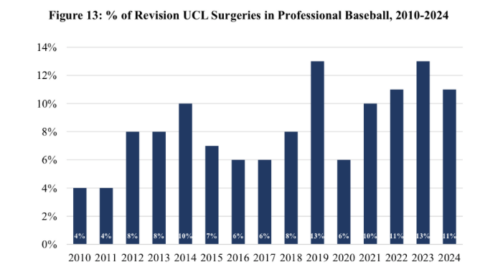
It might be worth noting that in todays game we see re-tearing happen a lot at the higher level. athletes are having a second Tommy John Surgery in their pro career. With the increased rate of Tommy John Surgery happening across the game and the re-tearing at the professional level, it’s obvious why a new form of Tommy John has been pushed. 

The internal brace is a strong, collagen-coated suture tape that is anchored across the repaired ligament. It acts like a seatbelt. It’s not meant to permanently replace the ligament or take full loads forever. Instead, it protects the healing tissue during the most vulnerable early phase of rehab. The athlete’s own ligament still does the long-term work, but the brace allows that ligament to heal in a safer, more controlled environment. Because the native anatomy is preserved and no graft has to biologically incorporate, the recovery timeline can be dramatically shorter.

This is why you sometimes hear about pitchers returning to competitive throwing in six to nine months after “Tommy John surgery.” In almost every one of those cases, what they actually had was a UCL repair with an internal brace. It’s still elbow surgery. It’s still serious. But it’s not the same operation that requires a full year and a half of rehab. The key, though, is that not everyone is a candidate. Repair with an internal brace works best in younger athletes with acute tears and good ligament quality. It’s much less effective in elbows that have been breaking down over time.

There are also situations where a surgeon may combine techniques. In some reconstructions, an internal brace is added alongside the tendon graft. The idea is to provide extra stability early on and potentially allow for a more confident rehab progression. However, this doesn’t magically turn a reconstruction into a six-month recovery. The graft still needs time to heal and mature, and the overall timeline remains much closer to that of a traditional Tommy John. The internal brace in this context is more of a supplement than a shortcut.

What complicates all of this is language. Fans, media members, and even athletes often use “Tommy John” as a blanket term. It doesn’t distinguish between reconstruction and repair. It doesn’t tell you whether an internal brace was used. It doesn’t explain whether the ligament was replaced or preserved. As a result, comparisons can be misleading. One pitcher’s comeback story might sound miraculous, while another’s absence feels endless, even though both are described in the exact same way.

The decision about which surgery to perform is ultimately based on what the surgeon sees in the elbow. The location of the tear matters. The quality of the ligament tissue matters. The age of the athlete, their throwing history, and whether the injury is acute or chronic all matter. A clean tear near the bone in a young pitcher with a healthy ligament may be an excellent candidate for repair with an internal brace. A veteran pitcher with years of accumulated stress and a frayed ligament is far more likely to need a full reconstruction.

It’s also worth noting that while reconstruction has decades of data behind it, repair with internal bracing is still relatively new in the big picture. The early and mid-term results have been very encouraging, but long-term durability is still being studied. That doesn’t make it risky or experimental, but it does mean that surgeons are careful about who they recommend it for. Done on the right patient, it can be a career-saver with a much faster return. Done on the wrong patient, it can fail.

So when someone says an athlete “had Tommy John,” the real question should be, “Which one?” Was the ligament replaced, or was it repaired? Was an internal brace used, or not? Those details tell you far more about what the athlete went through and what their road back is going to look like than the name of the surgery ever could. Tommy John surgery isn’t one thing anymore, and understanding that difference helps make sense of why recoveries can look so wildly different from one athlete to the next.


Want to get started training KP? We offer training options in (Tampa FL) for both healthy athletes seeking performance and injured athletes looking for PT.
For more on our Physical Therapy Click Here
To learn more about our performance training  Click Here

Want more KP? Be sure to check us out on our social media channels…
Youtube: @KP3
Twitter: @Kinetic_Pro
Instagram: @KineticProPerformance


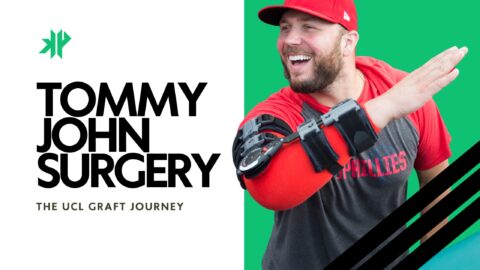
The UCL Graft Journey: Understanding Tommy John Surgery’s Critical Timelines

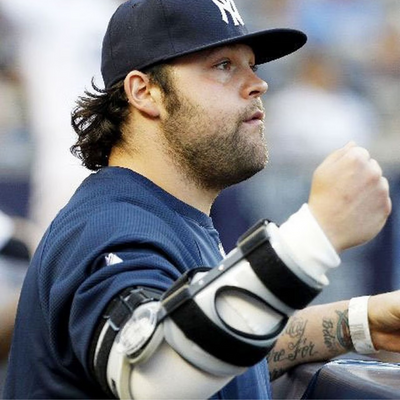
Have you ever seen someone walking around with one of those robot looking braces on their arm only to find out they have just had Tommy John Surgery? You might have wondered why pitchers need to wear such a device and what exactly that device is allowing the athlete to do. In the context of recovery from Tommy John there are so many questions parents and recipients have along these lines. 

You’ve likely heard the term “Tommy John Surgery” (UCL Reconstruction) tossed around, and probably, the even more common refrain: “It’s a year-long recovery.” But what exactly is happening during that year? Why does it take so long? And, most critically, when does that new ligament – the graft – truly “take” or “heal”? As someone who’s delved into the intricacies of Tommy John Surgery, I can tell you that understanding the biology behind the timeline is key to patience and successful rehabilitation. It’s not just about getting clearance from your surgeon; it’s about respecting the incredible, complex process your body goes through to rebuild itself.

Step 1: The Post Op Period (Fresh From Surgery)

Right after surgery, that new UCL graft is at its most vulnerable. Like, extremely vulnerable. We’re talking about a piece of tendon (often from your forearm or hamstring) that’s been surgically threaded through bone tunnels and anchored with sutures. While those sutures and bone anchors provide immediate mechanical stability, the graft itself is essentially a dead piece of tissue awaiting support to come back to life. Think about it like this, the blood supply has been severed, the cells within the tendon are starting to die off, and your body hasn’t yet recognized it as “part of the team.” It’s an inert structure, held in place by surgical magic, but lacking its own biological life support system. This is why you’re in a brace, restricted to specific flexion and extension limits, and why your physical therapist gives you the “death stare” if you even think about doing something stupid. “The initial period following UCL reconstruction is characterized by the graft’s avascularity and cellular necrosis, making it highly susceptible to mechanical failure without adequate protection,” notes a foundational text on sports medicine (Andrews & Wilk, 2012). This isn’t just theory; it’s why pushing it too early is a one-way ticket back to the operating table.

So, how does a dead piece of tendon become a strong, living ligament? This incredible process is called ligamentization. It’s a biological marvel that transforms the graft over many months. The first phase, spanning roughly the first six weeks, is dominated by inflammation and revascularization. Your body, ever the diligent repair crew, immediately sends inflammatory cells to the graft site. This is quickly followed by the growth of new blood vessels that slowly infiltrate the graft—a process known as revascularization. Think of it like a new road network being built into a previously isolated area. Crucially, during this phase, the graft is actually getting weaker before it gets stronger, as the initial cells die off and the new ones haven’t fully moved in and set up shop (Ahmad et al., 2004). This fragility is why strict protection of a brace and caution from the athlete is paramount.


Step 2: The Intermediate Period

As we move into the intermediate period, from about six weeks to six months, the elbow transitions into the stage of cellular proliferation and collagen deposition. By about six weeks post-op, the surgical fixation points (sutures, bone tunnels) are generally considered stable enough to allow for increased range of motion and discontinuation of the brace for daily activities. This is the first major psychological hurdle where you start to feel a little more “normal.” However, the major biological shift is underway: specialized cells called fibroblasts migrate into the graft, laying down new, haphazardly organized collagen fibers. Imagine a tangled mess of spaghetti. But they’re there, forming the early scaffolding of your new ligament. The graft is slowly gaining intrinsic biological strength, which is why it becomes less vulnerable, but it remains far from robust enough for high-velocity stress.

The long haul begins in the subsequent phase: remodeling and maturation, spanning from six months out to eighteen months or even longer. This is where the magic truly happens. The disorganized collagen fibers begin to align themselves along the lines of stress, becoming stronger and more organized. The graft tissue gradually transforms, both microscopically and macroscopically, to finally resemble a native ligament. It becomes denser, stiffer, and, crucially, capable of withstanding the incredible forces placed on the elbow during overhead throwing. “The complete biological maturation of the graft to a tissue structurally comparable to native UCL has been documented to extend beyond 12 months, often up to 18 months or more,” according to studies on graft histology (Sauers et al., 2017).


Step 3: The Return To Throw Period

To directly answer the burning question of “how  vulnerable is the graft at this point? The graft is no longer critically vulnerable and is structurally sound enough to begin a controlled, low-stress activity around four to six months post-op. This is not arbitrary; it is the time point where the graft has undergone sufficient ligamentization to tolerate the controlled, progressive stresses of a return-to-throwing program. The new collagen is forming, and the tissue has gained enough tensile strength to manage the low-intensity, gradual build-up of throwing mechanics. The final functional test comes at nine to twelve months, where athletes begin returning to competitive pitching. While the graft isn’t fully mature, it’s considered functionally strong enough to withstand increasing valgus stress. However, for the graft to achieve its true peak strength and maximum durability, the process extends beyond the year mark, often requiring up to eighteen months of careful, progressive loading to account for the final stages of collagen remodeling and alignment. This is why continued strength development AND A PROPERLY PROGRESSED THROWING PROGRAM are so critical. Finding the right people and programs for both could mean the difference in a successful return vs one to which you struggle to regain your footing at the higher levels. 


Conclusion

Dr. Ahmad and his team pointed out that only 28% of athletes return to who they once were on the field 3 years after Tommy John Surgery. Where we previously defined the surgery as massively successful, this paper identifies the difference in just throwing a pitch in a game again after TJ to reaching the same standard of performance as pre surgery.

The journey of a UCL graft from a harvested tendon to a fully integrated, functional ligament is a testament to your body’s healing capabilities. But it’s not a fast process. The initial fear of re-testing the UCL right out of surgery is completely valid because the graft is biologically compromised and reliant solely on mechanical fixation. As time progresses, through the incredible process of ligamentization, your graft gains its own blood supply, new cells, and organized collagen fibers, making it progressively less vulnerable. But “less vulnerable” never means “invincible,” especially in the high-stress environment of overhead athletics or pitching. Understanding these biological timelines helps us appreciate the importance of adherence to rehab protocols, patience, and realistic expectations.

As the research study referenced here indicates, it’s not just about getting back on the field… it’s about getting back better and winning your future. Understand the timelines, define success in the process and get back to performing at your best. That should be our goals. 


Want to get started training with KP?
Check out our in person training or our PT services located in Tampa FL.

Want more KP? Be sure to check us out on our social media channels…
Youtube: @KP3
Twitter: @Kinetic_Pro
Instagram: @KineticProPerformance


X

Lets Climb! Click here for quick links and support.